Skip to content
The number that shows up first when someone searches reverse osmosis system cost is rarely the number they end up living with. A unit might be listed at a couple hundred dollars, and then the filters, the installation, and years of daily use quietly rewrite the math. Anyone shopping for a reverse osmosis system for their home deserves the full picture before spending anything, so what follows breaks down what these systems cost, where the price tends to hide, and why the place a system is built changes what that money buys.
How much does a reverse osmosis system cost in 2026?
Here is the short version. Most under-sink systems for a home run from a couple hundred dollars at the bargain end to roughly a thousand or more for a well-made unit, before installation. QMP’s residential RO systems sit in the $500 to $1,000 and up range, which reflects the parts and the build rather than a markup on someone else’s hardware. Whole-house reverse osmosis system cost climbs into the thousands and answers a different question, so most families who only want cleaner water for drinking and cooking settle on an under-sink model.
| System type | Typical price | Who it suits |
| Countertop RO | Lower end, no plumbing | Renters and apartments |
| Under-sink RO (QMP’s focus) | $500 to $1,000+ | Everyday drinking and cooking |
| Whole-house RO | Several thousand and up | Filtering every tap in the house |
Where the price of a reverse osmosis system comes from
So what pushes one reverse osmosis system cost past another? A handful of things decide it, and none of them stay hidden once you know where to look.
- Filtration stages and the membrane: more stages and a stronger membrane remove a wider range of contaminants, and that hardware costs more to produce.
- Build materials: the housings, fittings, and faucet decide whether a system lasts for years or starts weeping at the connections.
- Capacity: how many gallons a day a unit makes affects both the flow at your tap and the size of the components inside.
- Installation: an under-sink setup can be a confident weekend job, while hiring a plumber adds a modest labor charge to the cost to install a reverse osmosis system.
- Replacement parts: the cartridges you buy for years shape the true cost of a reverse osmosis system for the home as much as the sticker does.
The part most brands leave off the price tag
Here is what gets skipped in most cost conversations. Plenty of the reverse osmosis systems sold in the United States are assembled from imported parts. The company on the box sources components wherever they are cheapest, puts them together, and ships the result. That approach keeps the upfront price low, and it also means no single team stands behind how the membrane housing, the fittings, and the faucet were made.
QMP works the other way around. Its systems come from 100 percent vertical manufacturing in the United States, with the faucets, housings, and cartridges produced in-house rather than bought in. The injection molding and machining happen under one roof in Valencia, California, which is part of why recognized names in the industry have relied on QMP to build for them.
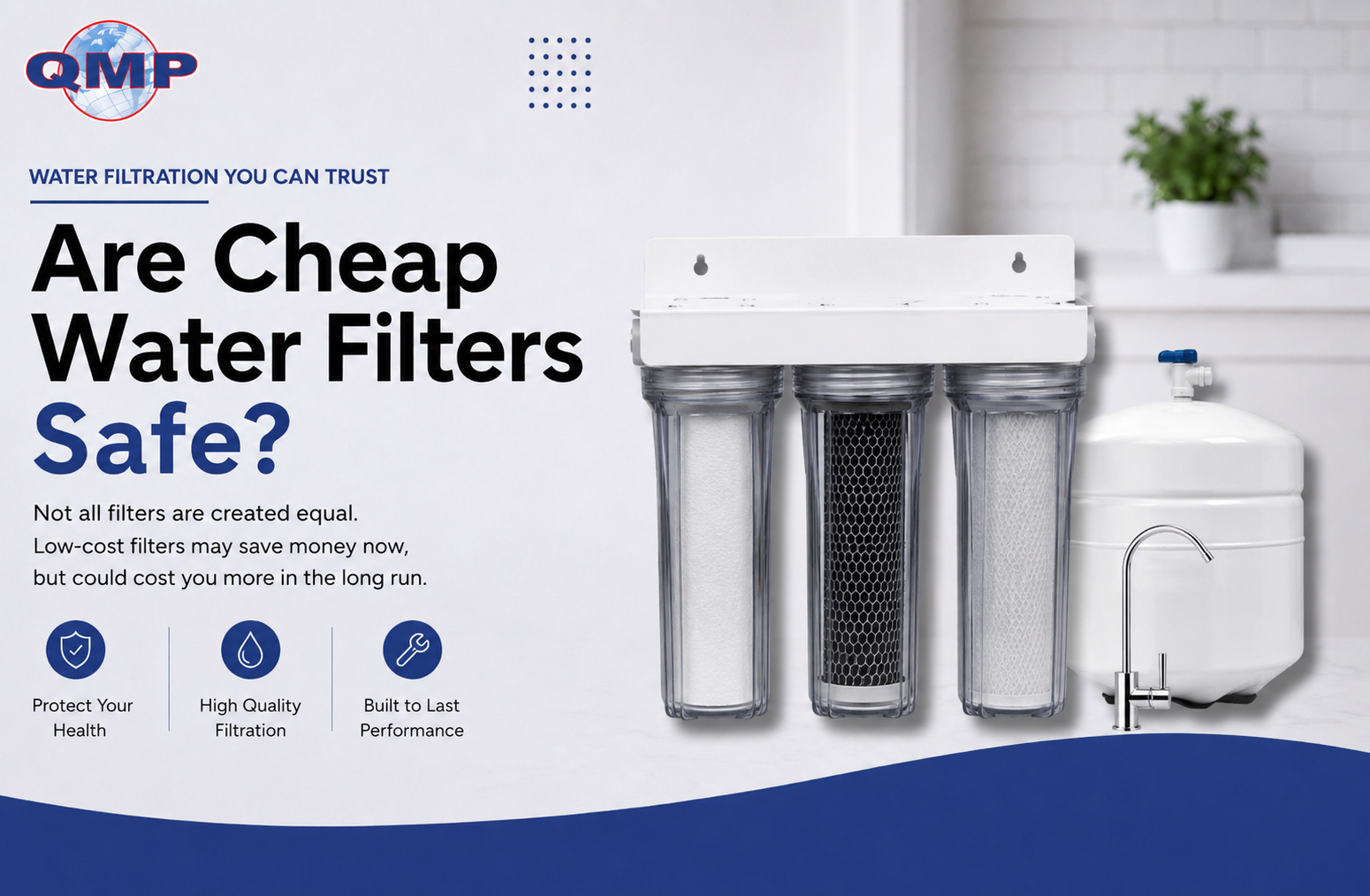
So what does that buy a homeowner? Control, mostly. When one team designs and makes the parts, the tolerances are tighter, the materials are known, and the cartridges are not locked to a proprietary shape that pushes up the reverse osmosis system cost every time a filter is due. It is the same reason cheap water filters can look like a deal and still let you down, since a low price usually reflects what was left out. For a fuller look at why domestic build quality holds up, QMP’s guide to American-made water filtration systems goes further.
| See how a vertically built RO system compares |
The costs that show up after you buy
The sticker price is a moment; the running side of the reverse osmosis system cost is where the relationship lives. Every system needs fresh filters on a schedule and a membrane every few years, so the reverse osmosis filter replacement cost is worth pricing before you commit rather than after.
| What gets replaced | How often | Notes |
| Sediment and carbon pre-filters | Every 6 to 12 months | Cheap insurance for the membrane |
| RO membrane | Every 2 to 5 years | The priciest single part |
| Post filter | Every 1 to 2 years | Keeps the taste consistent |
For a home under-sink unit, reverse osmosis maintenance cost usually lands in a modest yearly range once you average the parts across their lifespans. Standard-size cartridges keep that number sensible, while proprietary shapes push it up. Spread the whole system and its filters across the gallons it makes over its lifetime, and the cost per gallon drops well below bottled or delivered water, which is the unglamorous reason so many families never switch back. Under-sink upkeep is manageable, though it pays to know the common problems with under-sink RO systems before they start.
| Talk to QMP about the right system for your home |
So is a reverse osmosis system worth it?
For a household buying bottled water or worried about what comes out of the tap, the answer is usually yes, and the payback is easier to see than people expect. The EPA notes that point-of-use RO can reduce contaminants such as lead, PFAS, and arsenic right at the tap where you drink and cook, which is work a basic pitcher filter was never built to do. A well-made under-sink system tends to pay for itself within a couple of years against bottled water, and it keeps working long after the initial reverse osmosis system cost has been recovered.
- Worth it if: you buy bottled water often, your tap tastes off, or a water test flagged something.
- Maybe hold off if: you rent short-term and cannot install, or a certified test shows your water is already clean.
The point worth holding onto is simple enough. With a reverse osmosis system, paying attention to how it is built and who built it usually costs less across the ten years you will own it than chasing the lowest sticker ever did.
Reverse osmosis system cost: quick answers
How much does it cost to install a reverse osmosis system?
Under-sink installation is often a DIY job that takes a couple of hours with basic tools. If you would rather hire a plumber, expect a modest labor charge on top of the unit for the reverse osmosis installation cost, depending on your plumbing and whether a new faucet hole is needed.
What does an under-sink reverse osmosis system cost?
Across the market, basic under-sink units start low and better-built systems climb from there. QMP’s residential RO systems fall in the $500 to $1,000 and up range, which covers the unit itself before any installation.
How much does reverse osmosis maintenance cost each year?
You are mainly buying pre-filters once or twice a year and a membrane every few years. Averaged out, under-sink upkeep stays in a modest annual range, and standard-size cartridges keep the reverse osmosis filter replacement cost lower than proprietary ones do.
Is a reverse osmosis system worth the money?
For most homes buying bottled water or dealing with off-tasting tap water, yes. The system usually pays for itself within a couple of years, and it treats the water at the tap you drink and cook from.
Are American-made reverse osmosis systems worth paying more for?
Often, yes, because the price reflects parts made to a known standard rather than sourced on price alone. A vertically manufactured system like QMP’s gives you tighter quality control and cartridges that are not tied to a proprietary shape, which tends to lower the reverse osmosis system cost over the life of the unit.