Skip to content
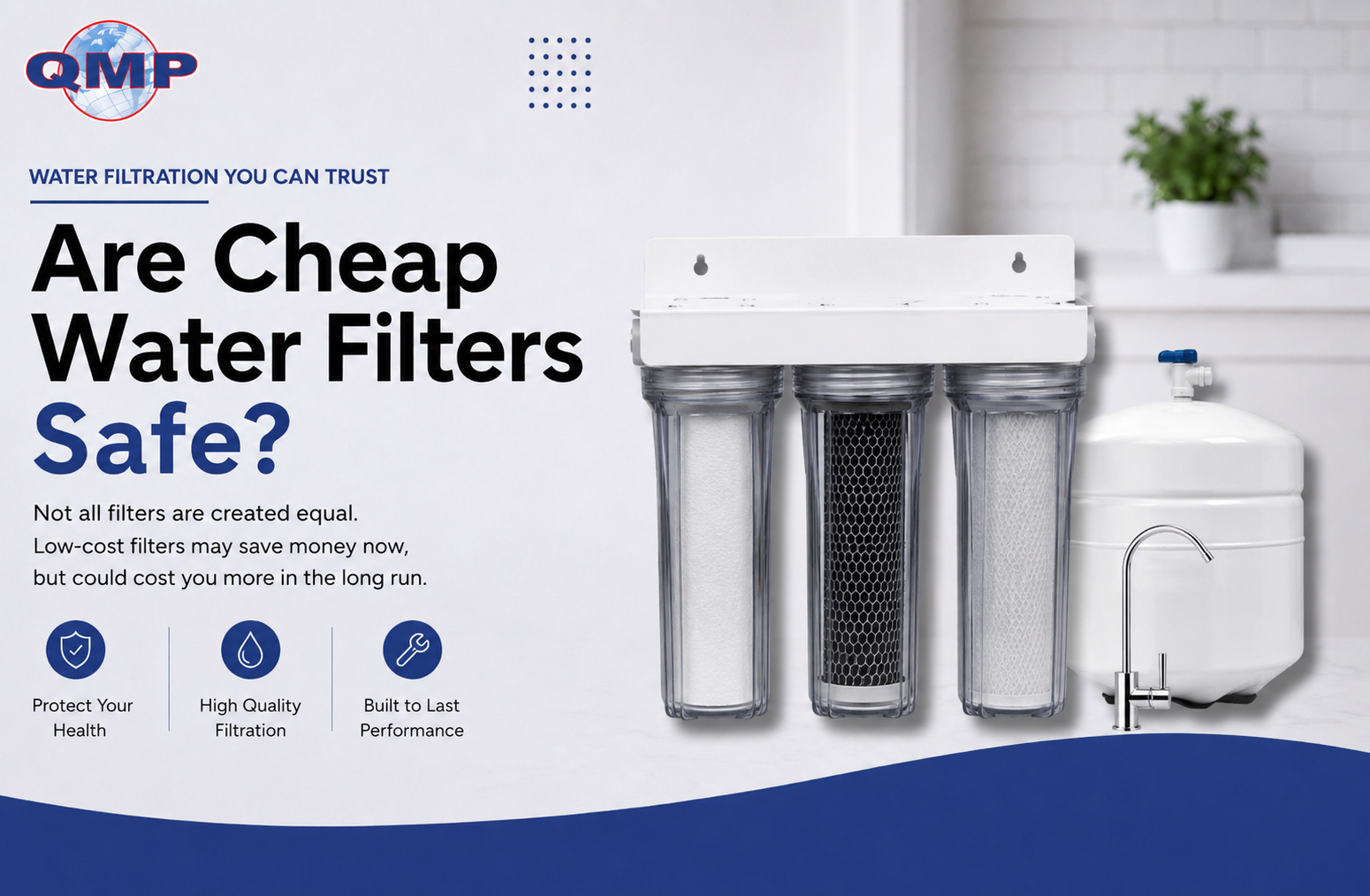
Most homeowners pick their first water filter based on taste. A pitcher that makes tap water less metallic, less chlorinated, and easier to drink with dinner feels like the obvious move in the store aisle. What that choice misses is everything a basic carbon filter wasn’t built to remove.
So are cheap water filters safe for daily use at home? For taste and odor problems, the answer is yes. For the contaminants behind most long-term health concerns, the answer is no. Lead from aging pipes, PFAS chemicals, arsenic, and pharmaceutical traces are what regulators are racing to address, and a $20 pitcher isn’t built to touch any of them. PFAS alone now affects roughly 176 million Americans according to Environmental Working Group data, and the EPA’s compliance deadline for public water systems doesn’t arrive until 2031.
A working filter comes down to three things you can verify: third-party certification for the contaminants that matter, materials that won’t leach back into your water, and enough filtration stages to handle more than taste. Most cheap filters miss on at least two.
What “Cheap” Means When It Comes to Water Filters
Michelle Vidal grew up on the production floor of her father’s water filtration factory. Her family has been building complete systems at QMP USA in Valencia, California since 1994, and she’s watched the gap between cheap filters and real filtration widen for years.
As she told Poosh: most carbon pitcher filters are “only good for removing chlorine for the most part.” The bigger issue, in her experience, is contact time. Water has to pass through multiple filtration stages to strip out heavy metals, fluoride, and bacteria. Skip that layered process and contaminants pass right through.
Plenty of $40 faucet attachments carry the same limitations as a $15 off-brand cartridge from an online marketplace, which is the first sign that price by itself doesn’t tell you much. The traits that separate a working filter from a cheap one sit elsewhere: third-party certification on the box, food-grade materials in the housing, and multi-stage filtration instead of a single carbon layer. QMP’s product lineup is built around all three from the start.
Most budget filters meet NSF/ANSI Standard 42, which only covers taste and odor. The standards that test for lead, PFAS, and heavy metals (Standard 53 and Standard 58) sit in a different tier, and most cheap filters never reach them.
| Contaminant | Budget Filters (Std 42) | Quality RO Systems (Std 58) |
| Chlorine taste and odor | Reduced | Reduced |
| Lead | Rarely tested | Verified removal |
| PFAS / forever chemicals | Not addressed | Verified removal |
| Arsenic | Not addressed | Verified removal |
| Fluoride | Not addressed | Verified removal |
| Microplastics | Not addressed | Verified removal |
| Nitrates | Not addressed | Verified removal |
| Pharmaceutical traces | Not addressed | Verified removal |
| Total dissolved solids (TDS) | Not addressed | Up to 98% removal |
If your only concern is taste, a budget filter does the job. Ask whether cheap water filters are safe for your family’s health, and the certification level tells a different story.
5 Risks of Trusting a Cheap Water Filter
1. They Leave the Most Harmful Contaminants in Your Water
PFAS contamination doesn’t break down naturally, which is why these synthetic chemicals are called forever chemicals. The EPA has introduced new limits, but public water systems have until 2031 to comply. Your tap water might sit outside those new standards for years before anything changes at the municipal level.
A standard carbon pitcher filter has no mechanism to remove PFAS. It also can’t handle lead, which continues to leach from aging pipes in older homes and city infrastructure. The CDC has confirmed that no safe blood lead level has been identified in children, yet most budget filters have never been tested for lead reduction at all. When homeowners ask whether cheap water filters are safe for daily drinking, these are the contaminants that should change the answer.
2. No Certification Means the Label Is Just Marketing
Here’s where packaging on cheap filters tends to trip people up. “Removes 99% of contaminants” shows up on boxes everywhere. Without third-party verification from NSF International or the Water Quality Association, that percentage is unverified copy and nothing more.
Checking a filter’s certification status takes less than a minute. NSF maintains a public database where you can search any brand and see which contaminants it’s been tested to reduce. If a filter doesn’t appear there, every claim on the box is the manufacturer’s own word. Water filter safety starts with knowing the difference between marketing copy and verified testing.
3. Low-Grade Materials Can Put Chemicals Back Into Your Water
This is the risk that catches most homeowners off guard. The filter is supposed to remove contaminants, but if the housing and fittings are built from uncertified plastics, the unit itself can introduce BPA and phthalates into every glass you pour. That risk increases the longer a filter sits under a warm sink between replacements.
A BPA-free water filter built with FDA-approved plastics avoids this problem. Many imported water filters use materials that wouldn’t pass domestic manufacturing requirements, which means the product designed to clean your water quietly adds to the contamination problem. The materials inside a water filter carry more weight in safety than most homeowners realize.
Michelle has made the same point about what real filtration requires: enough contact time across multiple stages to strip out heavy metals and bacteria. A single-stage imported filter with uncertified housing can’t deliver that no matter what the label promises.
4. Counterfeits Flood Online Marketplaces
Third-party sellers on Amazon and similar platforms routinely list counterfeit replacement cartridges. Packaging looks nearly identical to the original, product photos are borrowed from the manufacturer’s listing, and pricing runs 30 to 50 percent lower. Inside the box, the filter is either packed with inactive media or missing internal components.
A few warning signs worth watching for:
- Pricing noticeably lower than the manufacturer’s own store
- Sellers without any brand affiliation or authorized dealer status
- Cartridges that feel lighter than the original, or packaging with blurry print and mismatched fonts
Buying directly from the manufacturer or through an authorized distributor is still the most reliable way to avoid counterfeit filters.
5. The “Savings” End Up Costing You More
Michelle has described what happens when replacements get skipped on budget systems. Bacteria can grow inside an old, unchanged cartridge, and the filtered water coming out can carry more risk than the unfiltered tap going in. Most people have no idea it’s happening inside their pitcher.
The long-term math doesn’t favor cheap filters either. A standard pitcher cartridge lasts roughly two months and runs $8 to $12 per replacement. Over three years, that adds up to $144 to $216 in cartridges, and the entire time you’re only getting chlorine taste reduction.
A solid under-sink reverse osmosis system costs more upfront. Quality U.S.-built residential RO systems run from $800+ depending on configuration. The trade-off is filters that last six to twelve months, a unit that runs for years with minimal maintenance, and contaminant removal covering the full spectrum from lead and arsenic to PFAS. Cost per gallon of clean water drops once you compare what each system delivers over time.
When you measure what each option removes per dollar spent, cheap water filters stop looking like a bargain.
| Not sure which system fits your home’s water situation? Talk to the QMP team directly and get a recommendation based on what your tap is dealing with, not a generic catalog. |
Why Where Your Filter Is Manufactured Should Factor Into Your Decision
Most water filter brands don’t manufacture their products. They import components from overseas, assemble them at a domestic facility, and market the result as American-made. The housing arrives from one country, fittings from another, the membrane from a third. No single company controls the full production chain, and no one can guarantee every component meets the same safety standards.
QMP founder Freddy Vidal built the company around a different model when he started it in 1994. QMP manufactures 100% of its water filtration products in-house at its Valencia, California facility. Injection molding, CNC machining, faucets, cartridges, filter housings, and complete reverse osmosis systems all come off the same production floor under one set of quality requirements. None of it gets outsourced or assembled from imported parts the company can’t verify.
Vertical manufacturing closes the traceability gap that imported water filters carry. When one company handles every stage, the plastics, the fittings, and the membrane all sit under the same testing process. OEM partners like GE, Culligan, and Home Depot trust QMP to produce systems under their own brand names, and those partnerships only hold up when manufacturing standards stay consistent across every unit.
For homeowners trying to figure out whether cheap water filters are safe, manufacturing origin is one of the most overlooked factors in that decision. An American-made water filtration system from a company that controls its own materials, testing, and production gives you something a budget import can’t: a verified answer about what’s in the product touching your drinking water.
| Have questions about how QMP’s vertical manufacturing translates to the system in your home? Reach out to the team in Valencia and get answers from the people building the equipment. |
FAQs About Cheap Water Filters
1. Are overseas filters as safe as American-made ones?
Overseas filters often skip the material standards and certification testing required in U.S. production. Housings can use uncertified plastics, replacement cartridges don’t always match the original spec, and quality shifts between production runs without notice. American-made systems built under one roof give you traceability on every component touching your water.
2. What makes a water filter safe?
A safe water filter carries independent third-party certification, uses FDA-approved BPA-free materials, and comes from a manufacturer that controls its own production. Missing any one of those leaves a gap you can’t see from the outside. Michelle Vidal has emphasized that effective contaminant removal needs multiple filtration stages and sufficient contact time between the water and the filter media. Single-stage carbon filters can’t provide that, which is a core limitation of every budget option on the market.
3. Do cheap water filters remove lead?
Most budget carbon pitcher filters and faucet attachments have never been independently designed or tested for lead reduction. Only filters certified to NSF/ANSI Standard 53 (certain carbon block systems) or Standard 58 (reverse osmosis) have been verified to reduce lead below EPA action levels. If lead is a concern in your area, checking NSF’s database for certified products before buying is the most reliable step you can take.
4. How often should you replace a cheap water filter?
Pitcher cartridges typically need replacing every two months. Faucet-mounted filters last roughly three to four months depending on daily usage. The schedule only helps if you follow it. An overdue filter creates a different kind of problem. It can become a breeding ground for bacteria, which means the water coming out could carry more risk than unfiltered tap.
The filter sitting in your kitchen right now decides what ends up in every glass you pour. So are cheap water filters safe enough for your family? If yours only handles chlorine taste, it’s covering maybe ten percent of the job. Safe drinking water needs multi-stage filtration, quality materials, and a system built by people who control every step of the process. That’s the difference between water that tastes filtered and water you can rely on.