Skip to content
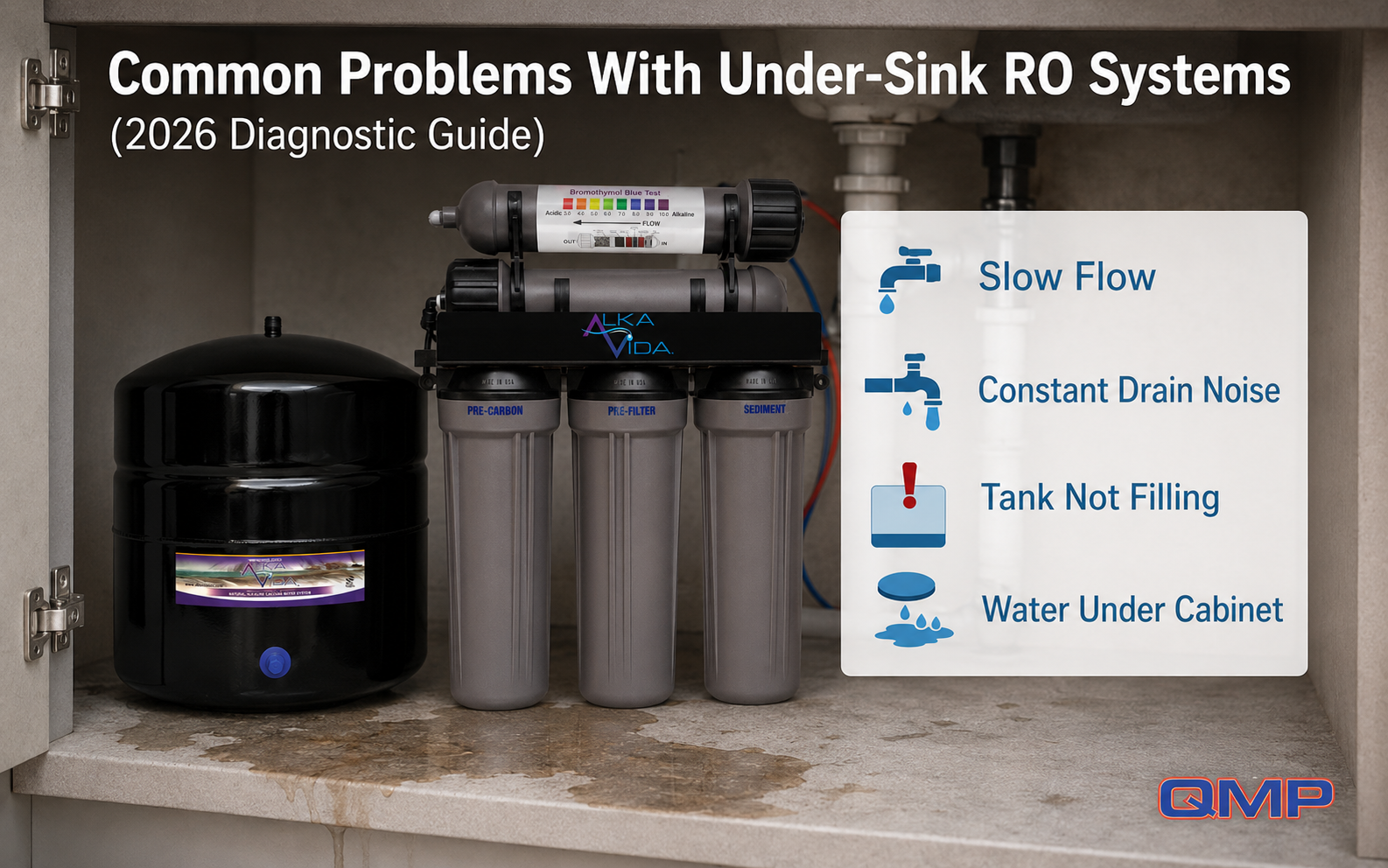
An under-sink RO system quietly works in the background, giving you clean drinking water without causing any trouble. Many homeowners explore different residential reverse osmosis system options before choosing the right setup. But even good systems can run into issues such as slow flow, constant drain noise, a tank that refuses to fill or worse, water on the cabinet floor.
Most under sink RO system problems are not catastrophic. They usually come down to one of two things. Installation errors or component wear. A loose fitting behaves very differently from a failing membrane. Knowing the difference saves time and money.
Here’s the good news: Most reverse osmosis troubleshooting can be done in under 10 minutes if you follow a logical process. No guessing. No random part swapping. Just simple checks, in the right order, to find the real cause fast.
Why American-Made RO Components Are More Important Than You think
Filters and features are typically the main topics of conversation when discussing under-sink RO systems. But, very few discuss the actual manufacturing location of the system. That is important.
Filtration components manufactured in the United States operate under stricter material compliance, documentation, and traceability standards. Manufacturers with vertically integrated molding and engineering oversight can control polymer sourcing, wall thickness tolerances, and pressure ratings from design through production. That level of control directly affects structural integrity and long-term safety.
When a system handles drinking water under pressure every day, material consistency and precision molding are not optional. They determine whether the housing seals properly year after year or develops stress cracks under repeated pressure cycles.
Good engineering is not just about removing contaminants. It also concerns the initial design of the system.
Start Here: 60-Second Diagnosis Checklist for Under Sink RO Systems
Before you take anything apart, pause. Most under sink reverse osmosis troubleshooting fails because people start replacing parts randomly. Let’s not do that.
Use this quick decision guide instead.
- No water at the faucet?
First check if the feed water valve is open. Then check if the tank valve is open. If both are open and nothing comes out, the RO tank may not be filling. - Slow flow?
If water trickles out, check tank pressure first. An empty RO tank should read around 7 to 8 PSI. Low tank pressure is one of the most common causes of weak flow. - RO drain line running constantly?
If the RO system keeps running even when you are not using water, close the tank valve and listen. If the drain keeps flowing, the shut off valve or check valve may be the issue. - Just changed filters?
If problems start after maintenance, double check O rings and housing alignment before assuming something is broken. Starting with tank pressure and feed PSI prevents misdiagnosis. Guessing leads to wasted time. A pressure gauge and simple logic solve most issues fast.
Problem 1 – Slow Flow or Low Water Pressure
Nothing frustrates people faster than turning on the faucet and watching water drip out like it is thinking about life. Under sink RO low water pressure is the most common complaint with under sink RO systems. The good news is that it is usually simple to diagnose.
Normal vs Abnormal Flow With PSI Benchmarks
An RO system depends on pressure to push water through the membrane. The ideal water pressure for RO system performance is between 40 and 60 PSI at the feed line.
If pressure drops below 40 PSI, production slows down. The tank fills slowly. You may think the system is failing when it is just underpowered.
In winter, water temperature drops and membranes produce water more slowly. This is normal physics, not system failure.
Now check the tank. An empty RO tank should measure about 7 to 8 PSI. If it is lower, the RO slow flow from faucet issue often comes from low air pressure inside the tank.
Quick Pressure & Flow Reference Guide
| Condition | Normal Range | Problem Indicator |
| Feed Water Pressure | 40-60 PSI | Below 40 PSI |
| Empty Tank Pressure | 7-8 PSI | Below 5 PSI |
| Tank Refill Time | 2-4 hours | 8+ hours |
| Winter Production | Slightly slower | Extremely slow output |
Top Causes of Low Flow
- Clogged prefilters:
Sediment and carbon filters restrict water if overdue for replacement. - Low tank air pressure:
Without proper air charge, stored water cannot push out properly. - Failing membrane:
If rejection drops and refill times increase significantly, the membrane may be fouled. In some cases, inconsistent internal component tolerances or mismatched replacement parts can also disrupt proper pressure balance, reducing overall system efficiency. - Feed pressure too low:
Homes with low supply pressure often struggle without support.
Problem 2 – RO Tank Not Filling or Very Slow to Fill
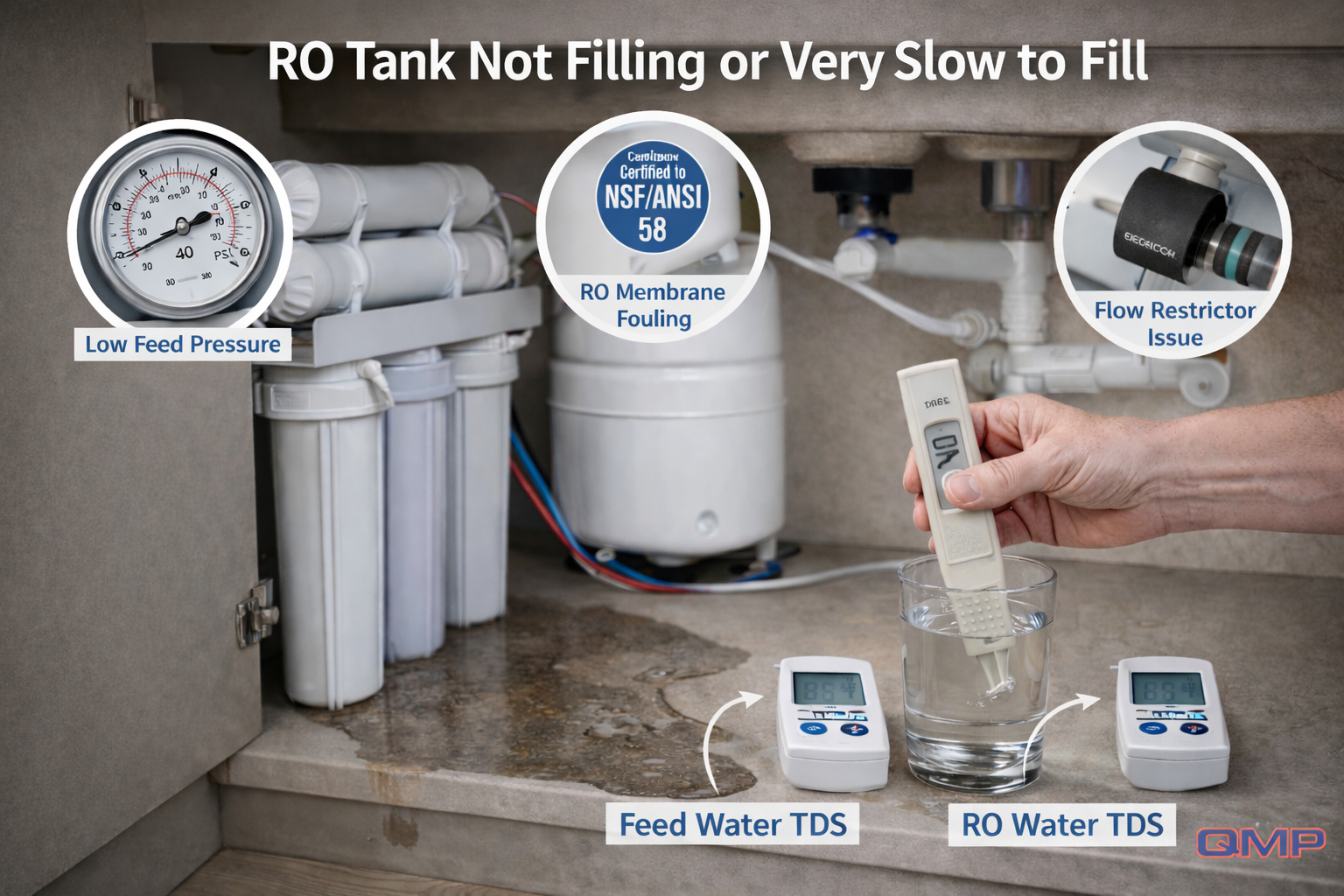
If your RO tank is not filling, or it takes half a day to refill, something is slowing production. This is different from slow faucet flow. Here, the system simply is not making water fast enough.
First, understand what is normal. Most under sink systems take 2 to 4 hours to fully refill an empty tank under proper pressure and average temperature. If it takes 8 to 12 hours, that is not normal.
Low feed pressure is the first suspect. If incoming pressure is below 40 PSI, production drops sharply. Temperature also plays a role. Cold water reduces membrane output. In winter, refill times naturally increase. Many homeowners mistake this for failure.
Now look at the membrane itself.
RO membrane fouling symptoms include slow production, rising TDS levels, and longer drain cycles. Scaling from hard water gradually blocks the membrane surface.
Another overlooked issue is the RO flow restrictor issue. The flow restrictor controls how much water goes to drain. If it is clogged or mismatched, it can disrupt pressure balance and slow tank filling.
Here is a simple membrane rejection test: Measure feed water TDS, then measure RO water TDS.
A healthy membrane typically reduces dissolved solids by 90 percent or more. Certified systems tested under NSF/ANSI 58 standards verify this level of performance.
You can confirm certified models in the official NSF certification database. If rejection drops significantly, the membrane may be near the end of its life.
Check pressure, check the temperature, Test TDS.
Then decide, not before.
Problem 3 – Bad Taste, Odor, or Cloudy Water
If RO water tastes bad, most people assume the whole system has failed. That is rarely true.
Taste issues are usually simple and fixable.
Start with the post carbon filter. This final stage improves flavor. If it is exhausted, water can taste flat or slightly chemical. A simple RO post carbon filter replacement often restores clean taste immediately.
Now let’s talk about cloudy RO water. If it looks milky right after you pour it, that is usually air bubbles. After a filter change, trapped air can create temporary cloudiness. Let the glass sit for a minute. If it clears from the bottom up, it is just air.
Odor problems can come from long periods of stagnation. If the system has not been used for weeks, bacteria can grow in standing water. In that case, it may be time to sanitize under sink RO system components and flush thoroughly.
Here is where verification matters – use a TDS meter, test feed water first, then test treated water.
If rejection remains strong, the membrane is likely fine. If TDS reduction drops significantly, membrane wear may be real.
Taste alone is not proof of failure: Measure first, replace parts second.
Problem 4 – Noisy Faucet or Air Gap Leaking
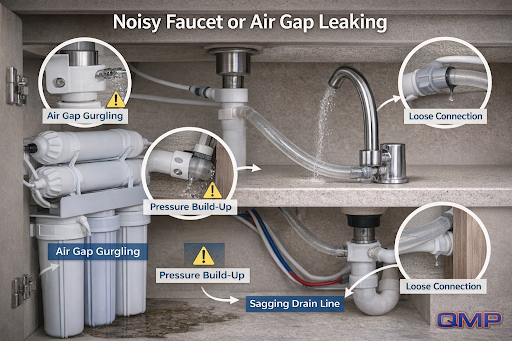
A little noise from your RO system is normal. A loud gurgling sound or water spitting from the faucet is not.
When people report an RO air gap leaking or a strange RO gurgling noise, the drain line is usually the real story.
First, understand what the air gap does.This tiny safety feature may not look like much, but it plays an important role – keeping dirty drain water from sneaking back into your drinking water system. Think of it as a physical break between clean and dirty water paths.
When the RO drain saddle is clogged or partially blocked, wastewater cannot flow freely into the drain pipe.
Pressure builds up.
Instead of going down the pipe, water may spit out of the air gap opening. That is not a faucet defect. It is a drainage restriction warning.
Examine the drain hose. There should be no sharp bends or loops in its downward slope. Long-term drain flow problems can also be avoided with secure connections and appropriately sized fittings and adapters. Water can be trapped and noise can be produced by a sagging hose.
Normal sound is a light trickle during production. Loud sputtering, frequent spitting, or continuous gurgling signals a blockage. Clear the drain path first before replacing any parts.
Issues Following RO Filter Replacement
Problems frequently arise immediately following maintenance. After changing the filters in accordance with the RO filter replacement schedule, the system starts acting differently.
Don’t panic.
First, the system may run longer than usual. That is normal.
New filters need to saturate, and the tank must refill completely. Give it time before assuming something is wrong.
Taste can also change temporarily. Fresh carbon filters sometimes release harmless fines at first. That is why learning how to flush the RO system after filter change is important. Run a full tank to drain at least once, sometimes twice, before judging taste.
Leaks after replacement usually trace back to simple reassembly mistakes. Dry O-rings can twist during tightening. Always apply a light coat of food grade lubricant before reinstalling housings.
Another common issue is not tightening evenly. Hand tighten firmly, but do not overdo it. If something feels forced, stop and realign.
Most post-maintenance problems are small installation errors. Slow down, double check seals, and flush properly. That solves most of them.
Preventing Problems in Under Sink RO Systems (2026 Maintenance Guide)
Most issues with under sink RO systems do not happen overnight, they build slowly, a clogged filter here, a pressure drop there. Then one day, the system “suddenly” stops working.
It was warning you the whole time.
Prevention is simple. It just needs consistency. Systems built with NSF-certified drinking water-safe polymers and precision-molded housings maintain structural integrity longer under constant pressure cycling. Consistent wall thickness, properly engineered end caps, and verified material traceability reduce the risk of long-term stress cracking.
Follow a clear RO filter replacement schedule and use high quality replacement cartridges designed for consistent performance. Plan to replace sediment and carbon filters every 6 to 12 months, based on how clean your water is. The RO membrane generally lasts 2 to 3 years, but high mineral content or heavy usage can reduce that timeframe.
Also understand the RO water waste ratio. If drain flow suddenly increases compared to product water, something may be off with pressure or flow control.
When to Repair vs Replace Your Under Sink RO System
Not every issue means the system is done. Many under sink RO system problems are small and repairable. The key is knowing when fixing makes sense and when upgrading is smarter.
Start with age.
Most residential systems last 8 to 12 years if maintained properly. If your system is only a few years old, reverse osmosis troubleshooting and replacing worn parts is usually the right move.
Inspect the pressure housings carefully. Cracked or warped housings are not worth ignoring. Pressure vessels and filter housings must seal properly. Structural damage is a safety risk, not just a performance issue.
It is also worth paying attention to what the system is actually made of, not just how it looks on the outside.
The plastics used inside a quality under sink RO system are not random. They are materials specifically approved for drinking water contact under FDA and NSF standards. You can review product certifications and potable water safety standards through the official NSF International certification listings, which identify products tested for compliance and material safety.
Cheaper plastics are a different story. Over time, constant pressure and daily use can cause them to weaken.
You may not see damage right away.
A hairline crack or slight warping can go unnoticed until it turns into a leak under your cabinet.
So when you are deciding whether to repair or replace a system, do not focus only on how old it is. Ask what it is made from.
Material quality is not just a spec on a box. It directly affects how safely and reliably the system will perform over time.
After evaluating the housing and material condition, the next step is to check membrane performance. If TDS rejection drops far below acceptable levels even after replacing prefilters, the membrane may be worn out. That is a normal wear item.
Frequently Asked Questions About Under Sink RO Systems
Why does my under sink RO system keep draining even when I’m not using it?
If your RO drain line seems to run all the time, it usually means the system is not building enough pressure inside the tank. That pressure is what tells it to stop. Low tank air pressure, a worn shut off valve, or a faulty check valve are the most common causes. Try closing the tank valve and listening to the drain. If it still runs, the shut off system likely needs attention.
How can I tell if my RO tank is actually bad or just low on air?
Before replacing the tank, check the air pressure. When the tank is empty, it should read about 7 to 8 PSI. If it is lower, you may only need to recharge it. A truly failed tank usually cannot hold much water at all, even if pressure seems normal. Testing first can save you from buying a part you do not need.
Why does my RO water taste different right after I change the filters?
After changing the filters, a slight change in taste is typical. Before the water tastes normal again, new carbon filters must be thoroughly flushed. Once or twice, run and empty a full tank. Before assuming a membrane issue, make sure the filters were installed correctly and that the O rings are seated correctly if the taste is still strange.
How often should I really replace filters in under sink RO systems?
The majority of carbon and sediment filters need to be changed every six to twelve months. Depending on the quality of your water, the membrane typically lasts two to three years. An extended period of waiting can cause membrane stress and decreased performance.