Skip to content
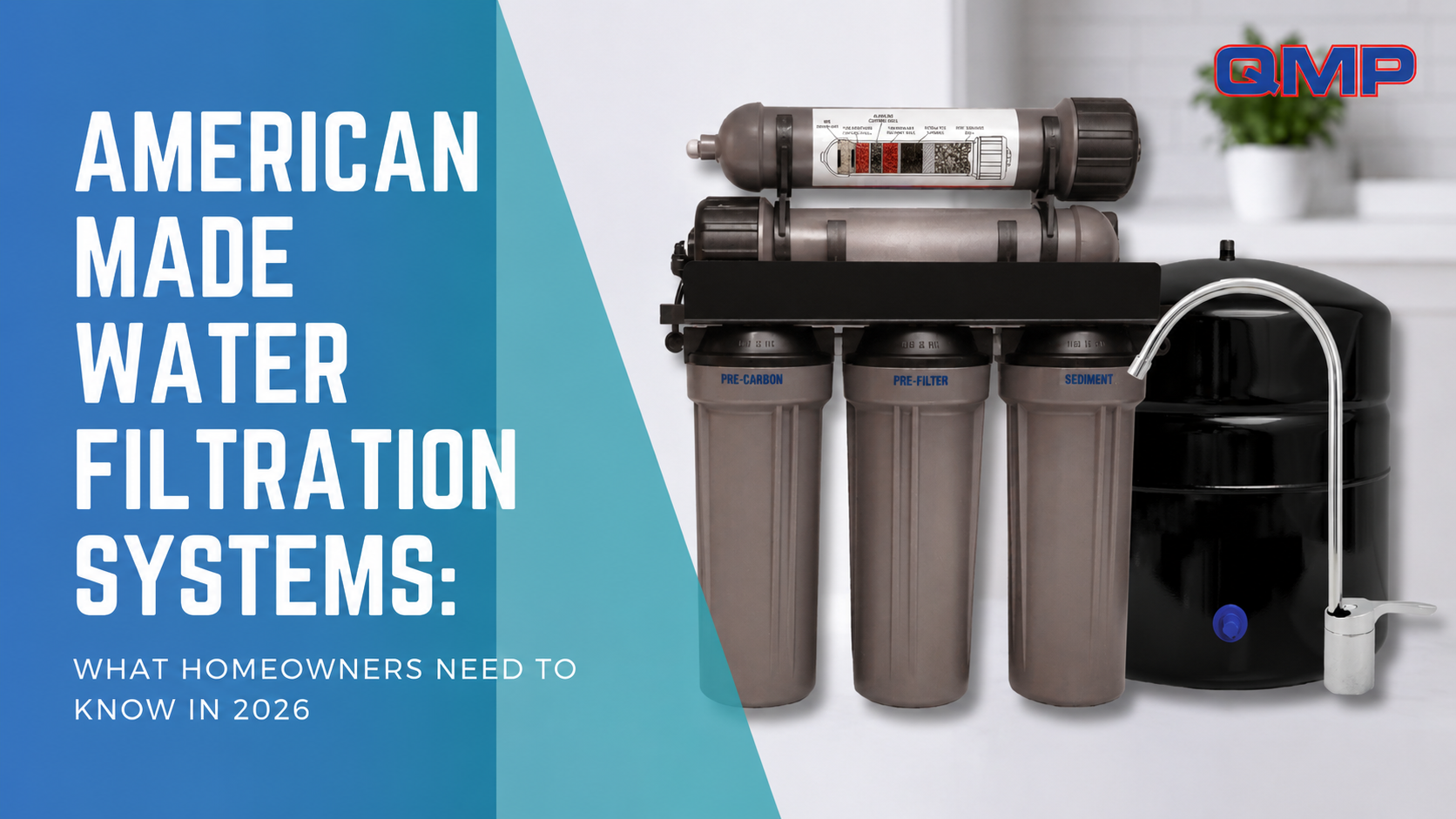
There is one detail about water filtration systems that most homeowners completely overlook, and it has nothing to do with how many stages a filter has or what contaminants it claims to remove. It is where the system was actually built, who made the components inside it, and whether anyone was genuinely accountable for the quality of each piece before it ended up under your sink.
Michelle Vidal, founder of AlkaGlam, started her career at a water filtration company, which shaped her understanding of how these systems function. She explained it simply when she told Poosh that “water needs to go through multiple stages of filtration to effectively remove heavy metals, fluoride, and bacteria.”
That sounds straightforward enough, but when you start looking at how most filtration systems are actually put together, you realize the gap between what companies promise on the box and what they deliver inside the box is enormous.
Her father, Freddy Vidal, founded QMP and has spent over 25 years building filtration systems for companies like GE, Culligan, and Home Depot, so this family knows the difference between real manufacturing and the kind of assembly-line shortcut that dominates the industry today. And that difference matters a lot more than most people realize.
Why Your Tap Water Is Not as Clean as You Think
Here is where it gets uncomfortable. Most families trust their tap water because it passes a government safety test, but passing a test and being genuinely clean are two very different things.
PFAS chemicals, the ones researchers call “forever chemicals” because they literally never break down in the environment, have been detected in tap water serving roughly 176 million Americans according to the Environmental Working Group. The EPA finalized drinking water limits for some of these chemicals in 2024, but water systems are not required to fully comply until 2031, which means families are going to be exposed for years before any meaningful enforcement kicks in.
On top of that, aging pipes across the country are leaching lead and other metals into the water before it ever reaches your faucet. Agricultural runoff carries pesticides into local supplies. Chlorine disinfection, while necessary, creates its own chemical byproducts that come with documented health risks. Your water might be technically legal, but that does not mean you would want to look at a full lab report of what is actually in it.
According to Michelle, a lot of people try to solve this with a carbon pitcher filter, the kind you grab off a shelf at Target or Walmart, but those are “only good for removing chlorine for the most part.” Even worse, she warned that forgetting to change those filters on schedule “can cause bacteria growth, which can be more harmful than drinking tap water.” So the product people buy to feel safer about their water can quietly become a health risk itself, and most families have no idea what is happening.
That is exactly why understanding what real safe drinking water filtration looks like matters before you spend a dollar on any system.
How Reverse Osmosis Actually Protects Your Water
So if basic pitcher filters barely scratch the surface, the obvious question becomes what actually works, and this is where reverse osmosis earns its reputation.
Michelle described the technology on Poosh in a way that makes it genuinely accessible. She explained that one of the main types of filtered water people drink is reverse osmosis water, “which is from a water filter underneath your sink with multiple filter stages” and that “it uses a membrane that removes dissolved inorganic solids from the solution.”
In everyday terms, a residential reverse osmosis system pushes your tap water through a series of filters and then through a membrane so fine that it catches contaminants at the molecular level, stripping out up to 99% of dissolved substances including lead, arsenic, fluoride, chlorine, and those same PFAS chemicals showing up in water supplies across the country. That is a fundamentally different category of protection compared to anything a pitcher or refrigerator filter can offer, and it is the same core technology that commercial bottled water plants rely on at scale.
The reverse osmosis benefits go well beyond just safety though, because families consistently notice water that tastes dramatically better, cleaner ice cubes, and a real improvement in cooking flavor once they make the switch. A quality American made water filtration system with RO technology puts all of that performance right under your kitchen sink without the environmental waste and ongoing expense of buying bottled water every week.
Here Is What People Get Wrong About “Made in USA” Filters
This is where the water filtration industry has a dirty secret that most homeowners never hear about. The majority of companies putting “Made in USA” on their packaging are not actually manufacturing anything. They are assembling imported parts from multiple overseas suppliers, boxing them up in an American warehouse, and calling the finished product domestic.
Think about what that actually means. The filter housing comes from one overseas factory, the membrane ships in from another country, and the faucet arrives from somewhere else entirely. Nobody in that chain had full control over the materials, the tolerances, or the quality of any individual component, and since water filter quality standards vary dramatically between countries, traceability essentially disappears once you are sourcing from three or four different suppliers. You have no way of knowing what that plastic housing touching your drinking water is really made of, and the company selling it to you probably does not know either because they did not build it.
Freddy Vidal has watched this cycle play out for over 25 years in the industry, and it is the reason he built QMP as a completely different kind of operation. When you actually manufacture everything yourself under one roof, you control every single piece of the puzzle, and when the product is going to touch someone’s family’s drinking water every day for the next decade, that kind of control is not a marketing advantage. It is a responsibility. Anyone shopping for a genuine made in USA water filtration system needs to look a lot deeper than whatever the label says.
What Vertical Manufacturing Actually Looks Like
So here is the part that changes everything once you understand it, because this is where the gap between assemblers and real manufacturers becomes impossible to ignore.
QMP is a true vertical manufacturer. That means the faucets, the filter housings, the cartridges, and the complete residential units are all produced at their facility in Valencia, California with in-house injection molding, in-house CNC machining, and engineering, design, production, and quality testing all happening under one roof. Most companies in this space cannot tell you where their faucet was machined or what grade of plastic went into their filter housing, but QMP can answer both of those questions without hesitating because they built every piece themselves.
That depth of manufacturing is why companies like GE, Culligan, and Home Depot have chosen QMP as their OEM partner over the years. You do not earn those kinds of relationships by cutting corners or outsourcing to whoever offers the lowest bid. Over 30 years of American made water filtration, all from a single U.S. facility, is what a real American made water filtration system looks like when the people behind it are actually accountable for what comes out the other end.
The Pricing Reality Every Family Should Understand
A lot of people assume they can get a solid reverse osmosis drinking water system for around a hundred dollars, and you will absolutely find units at that price point online, but here is what those listings are not telling you.
Budget systems are almost always assembled from whatever overseas components happen to be cheapest at the time, which means the plastics might not be certified for drinking water contact, the membranes are lower grade, and the fittings tend to crack or leak after a year or two of everyday use. By the time you replace failed parts and deal with water damage from slow leaks under your sink, you have usually spent more than a quality system would have cost from the very beginning.
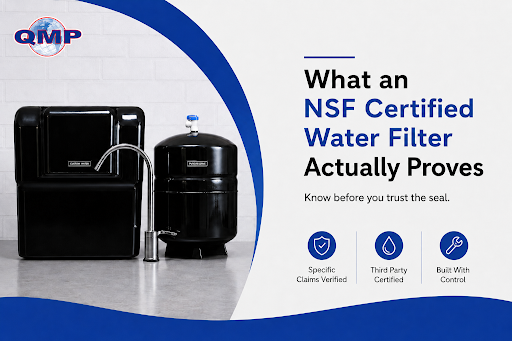
A genuine U.S. manufactured residential reverse osmosis system typically runs anywhere from $500 to over $1,000 depending on the number of filtration stages and the quality of components inside, and that price reflects NSF-certified materials, BPA-free and lead-free components, and production on an American factory floor where standards are enforced every single day rather than assumed from a spec sheet overseas.
The difference between a domestic vs imported water filter really shows up over years of daily use when you are comparing reliability, actual water quality, and how long the system holds up. Cheap filters and real filtration are two completely different categories. One gives you the feeling of clean drinking water at home, the other actually delivers it.
Which ALKA System Fits Your Home
Each American made water filtration system in the ALKA line was designed around a different household need, so the right choice depends on your space and how much water your family goes through on a daily basis.
- The ALKA75 is a dependable under sink RO system for everyday household use that delivers consistent contaminant removal and noticeably cleaner tasting water, and for most families this is the system that makes the most sense as a starting point.
- The ALKA Platinum steps things up with enhanced filtration stages and higher flow rates, making it the right fit for bigger households or anyone who wants the best home water filtration system available without compromise.
- The ALKA50 is built specifically for smaller kitchens or apartments where cabinet space is tight but having access to genuinely clean water still matters just as much.
Every residential water filtration system in the ALKA line is manufactured at QMP’s facility in Valencia, California, and they also build custom filtration systems for distributors and water professionals who need something built to specific requirements.
| Not sure which system is right for your home? Email info@qmpusa.com or call (661) 294-6860, or reach out directly through the website. |
Frequently Asked Questions
What makes a water filtration system truly “American made”?
A real American made water filtration system means the components were manufactured, assembled, and quality tested inside a U.S. facility using domestically sourced materials, not just designed here and shipped in from overseas for final assembly. At QMP, engineering and production both happen at their facility in Valencia, California, which is something most companies in this industry simply cannot say about their own products.
Is reverse osmosis the best option for home drinking water?
For thorough contaminant removal, a residential reverse osmosis system is the most effective residential option available right now. Pitcher filters help with taste and carbon filters catch some chemicals, but neither one pulls out dissolved heavy metals, fluoride, or PFAS the way RO technology does, so if you want safe drinking water filtration that covers the full range of what could be lurking in your water, reverse osmosis is the clear choice.
How long should a residential reverse osmosis system last?
A well-built American made water filtration system should last anywhere from 10 to 15 years with proper maintenance, where the filters need replacing every 6 to 12 months and the RO membrane typically lasts about 2 to 3 years before needing a swap. Systems manufactured with higher grade U.S. sourced components hold up significantly better over the long run compared to ones assembled from bargain priced imported parts.
Why do U.S. manufactured systems cost more than imported ones?
Because you are paying for verified materials, enforced quality control, and NSF-certified lead-free components that stay consistent batch after batch and year after year. A genuine made in USA water filter uses production standards that are enforced on the factory floor every single day, while imported systems often rely on whatever components happen to be cheapest at the time, which means quality can swing dramatically from one production run to the next.
Does QMP sell directly to homeowners?
QMP primarily works with distributors, water professionals, and OEM partners, but homeowners who are trying to figure out the right setup for their kitchen are always welcome to reach out by calling (661) 294-6860 or emailing info@qmpusa.com.