Skip to content
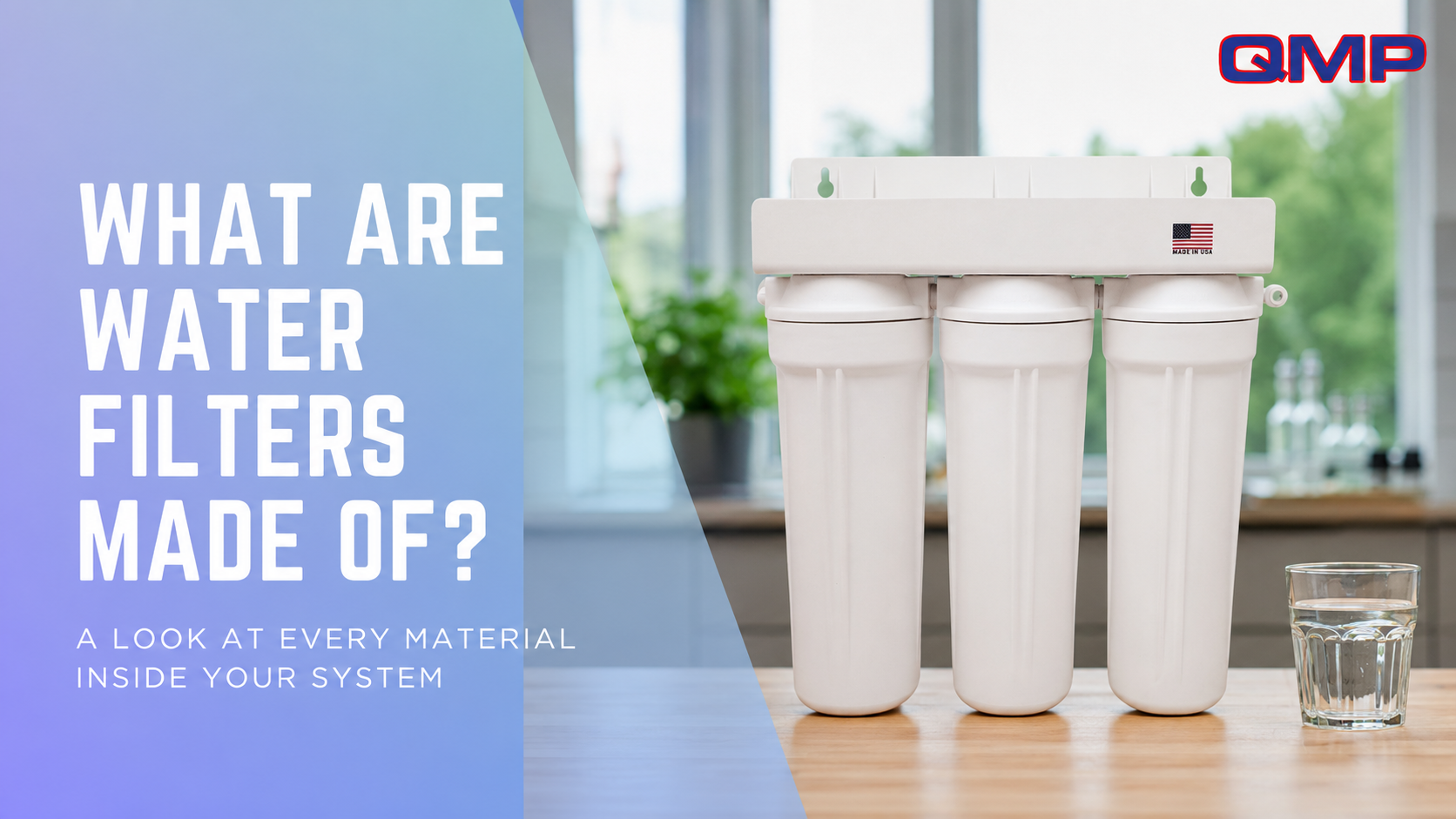
If you have ever looked at a residential reverse osmosis system sitting under your kitchen sink, you probably wondered what is going on inside that thing. Most people compare brands and read reviews. But almost nobody stops to think about what the filter itself is built from.
According to Michelle Vidal, founder of AlkaGlam, who started her career at a water filtration industry, the materials inside your system matter just as much as the technology since every component comes into direct contact with your drinking water. The carbon, the membrane, the housing, the seals, the tubing. Your water touches all of it before it reaches your glass.
The Filtration Media: What Actually Cleans Your Water
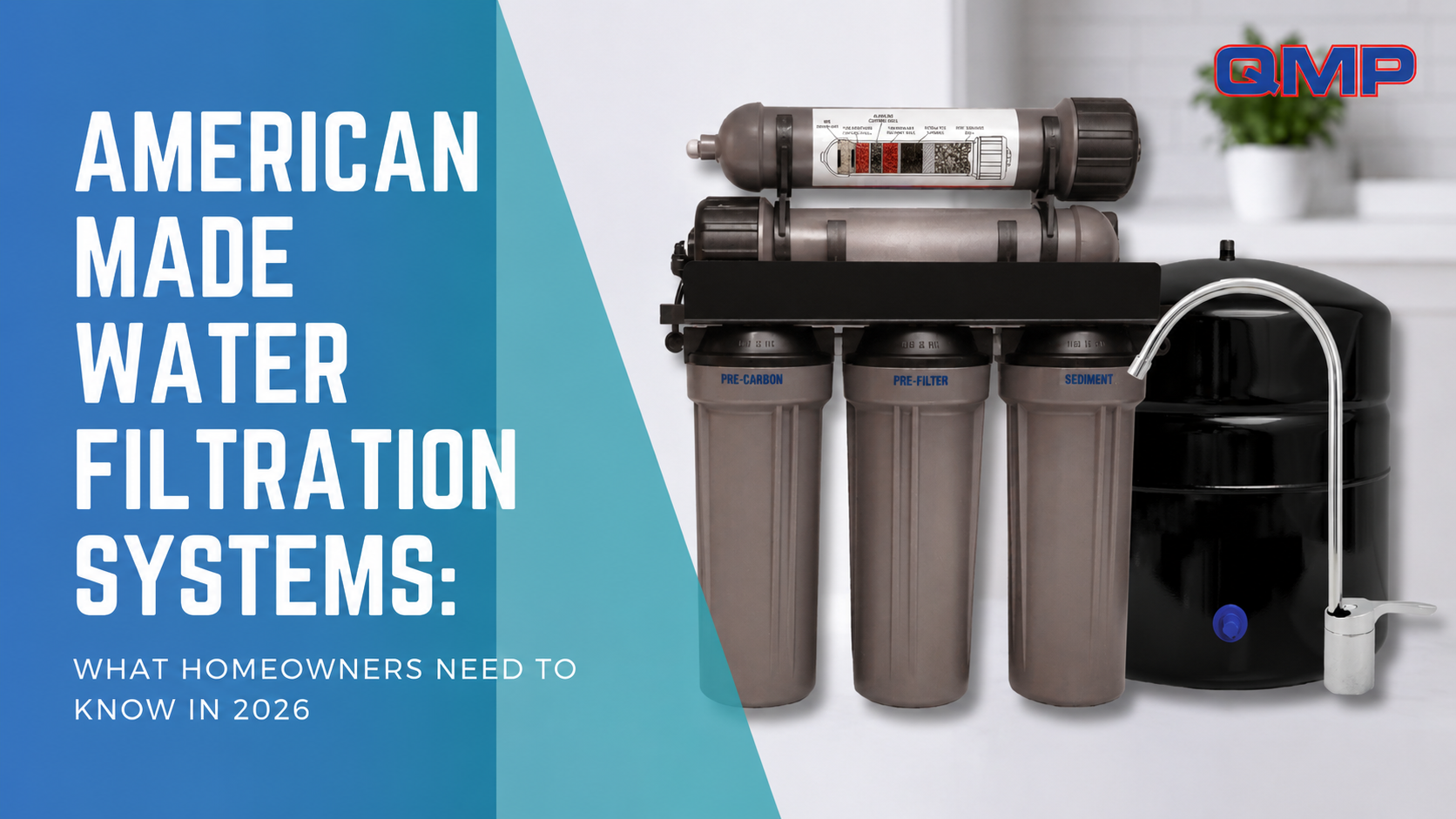
So when people ask what water filters are made of, they are usually talking about whatever is sitting inside the cartridge. Fair enough. That is where the real work gets done. And in a home water filtration system, you are looking at three different types of media that each pull their own weight.
Carbon (And Why the Source Matters)
Most residential filters start with activated carbon. The way it works is pretty simple. Chlorine, pesticides, volatile organic compounds, they latch onto the carbon surface as water flows past. That is the reason your tap water stops tasting like a swimming pool once it runs through a halfway decent filter.
Here is what people get wrong though. Not all carbon is the same. Coconut shell carbon has way more micropores than coal or wood-based alternatives, meaning more surface area and better contaminant removal. You will find it in better residential reverse osmosis systems. The budget options skip it.
Michelle talked about this in a Poosh article on water filtration. She pointed out that basic carbon pitcher filters are “only good for removing chlorine for the most part” and that “water needs to go through multiple stages of filtration to effectively remove heavy metals, fluoride, and bacteria.” One carbon stage is a start, but on its own, it is not enough.
The RO Membrane
Here is where it gets really interesting. The reverse osmosis membrane has a pore size around 0.0001 microns, thousands of times smaller than a human hair. Lead, arsenic, fluoride, PFAS, none of it gets through a properly built TFC membrane.
Michelle shared that a quality RO system can “remove up to 98% of total dissolved solids.” Minerals, salts, metals, charged ions. All the invisible stuff you do not want building up in your body.
But those numbers only hold when the membrane is built to last. Freddy Vidal, a 25-year veteran of the water industry who has developed products for GE and Home Depot, has seen this firsthand. The membrane is exactly where low-cost manufacturers cut corners first because most homeowners never notice the drop in performance until it is too late.
Sediment Pre-Filters
Before water reaches the carbon or membrane, it passes through a sediment pre-filter made from melt-blown polypropylene. Food-safe material designed to catch rust, sand, and dirt before they clog the more delicate stages downstream.
Not the flashiest component when you think about what water filters are made of. But it keeps everything else running properly.
Beyond the Media: The Housing, Tubing, and Tank
Here is one thing people forget when they ask what are water filters made of. The filtration media is only part of the picture. Your water also runs through the housing, tubing, fittings, and storage tank.
Good housings are food-grade, BPA-free polypropylene or high-grade ABS plastic. Cheaper imported systems sometimes use plastics never rated for drinking water contact, and those materials can leach chemicals right back into the water you just filtered.
The tubing in most under sink RO systems is polyethylene and needs to be NSF-listed and FDA-compliant. Fittings should be lead-free. O-rings are typically silicone or EPDM rubber. Small parts, but if any are substandard, they become the weakest link.
Your reverse osmosis drinking water system also holds filtered water in a pressurized tank with a butyl rubber bladder inside. That water sits against the bladder for hours. If the material is not food-grade, you have got an invisible problem.
The Pricing Reality Most People Miss
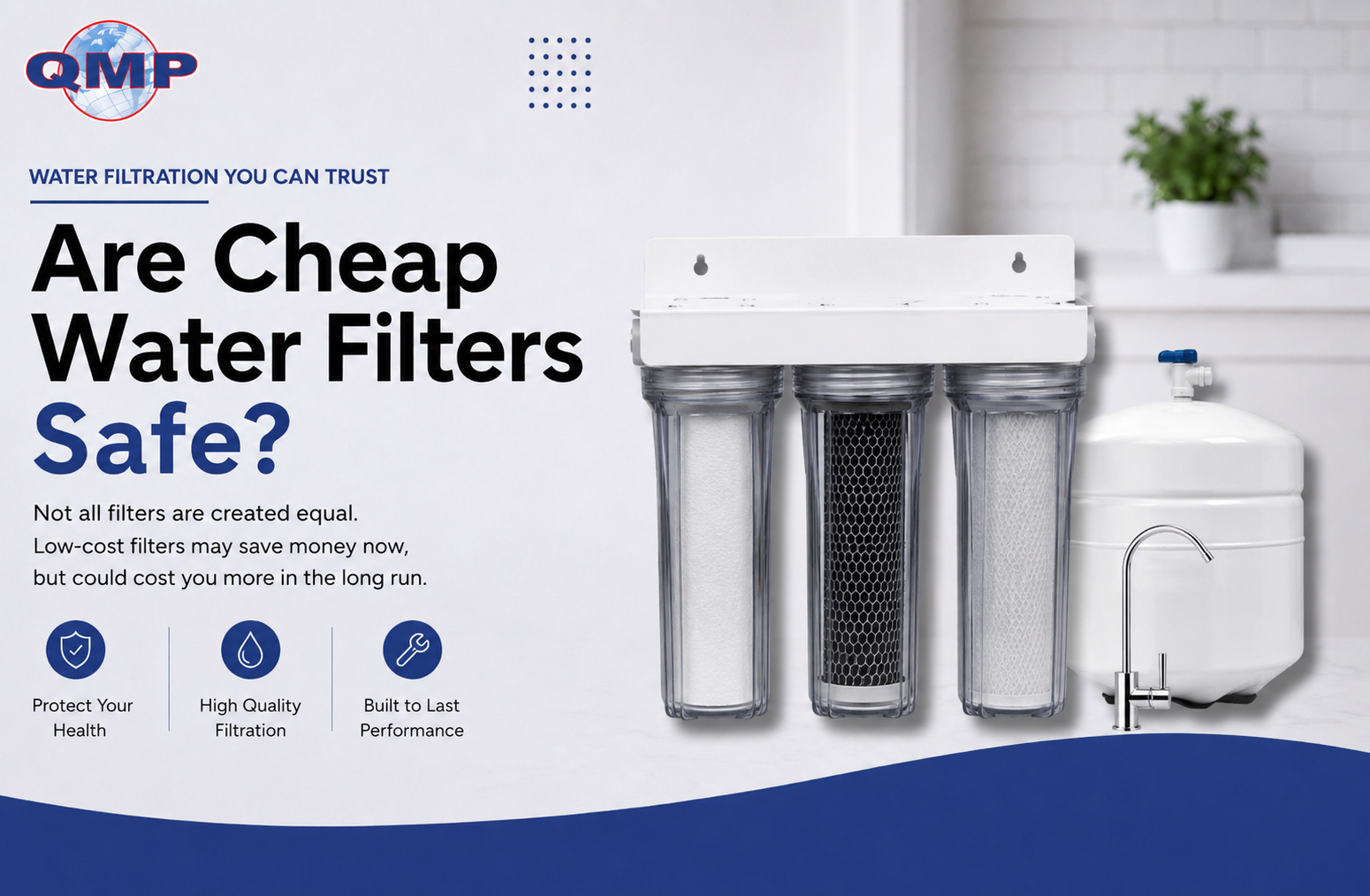
A lot of people think they can get a solid reverse osmosis system for $100 or $200. At that price, you are not getting a filtration system. You are getting something assembled from the cheapest imported parts available.
Quality U.S. built residential reverse osmosis systems, the kind made with coconut shell carbon, high-grade TFC membranes, food-grade housings, and NSF-listed components, generally run $800 and up.
Freddy has been saying this for years. A cheap filter and a real filtration system are not the same thing. A $40 pitcher removes some chlorine. A quality under sink RO system removes up to 98% of dissolved solids, heavy metals, and contaminants your city water report does not even test for. The EPA has set legally enforceable limits on PFAS “forever chemicals” in drinking water, and a properly built reverse osmosis system is one of the most effective ways to reduce them at home.
Cheap filters are not real filtration. And once you understand what water filters are made of at a component level, the difference is impossible to ignore.
Here Is What Most “Manufacturers” Are Not Telling You
So what does that actually mean when a company calls themselves a water filter manufacturer? Here is where it gets confusing for a lot of people.
Most companies in this space are not actually manufacturing anything. They buy pre-made parts from overseas, housings from one supplier, membranes from another, fittings from a third. They assemble those parts, slap their label on the box, and call it their product. No way to trace where those materials came from or if they meet safety standards.
This is exactly what Freddy has been pushing back against. QMP was started in 1994 with a focus on building filtration components right here in California. Not assembling. Actually manufacturing. Injection molding, CNC machining, cartridge production, faucet fabrication, full system assembly. Everything under one roof in Valencia.
That is vertical manufacturing. QMP builds its own housings, faucets, cartridges, and complete units. When you understand what are water filters made of and see a company that controls every material in the process, the difference is obvious. Every component meets FDA, EPA, and NSF material safety requirements. Housings get injection-molded from virgin food-grade resins with full batch traceability. That is a completely different standard than a system assembled overseas with no paper trail.
| Have questions about filter materials or want to understand how a U.S. manufactured system compares? Get in touch with QMP at (661) 294-6860 or info@qmpusa.com and the team will walk you through it. |
How to Verify Your Filter Materials Are Safe
Understanding what are water filters made of is the first step. The second step is verifying those materials are actually safe. The fastest way? Look for NSF/ANSI certifications.
NSF/ANSI 58 covers reverse osmosis systems and evaluates every material that touches your drinking water. NSF/ANSI 42 and 53 apply to carbon filtration, covering taste, odor, and health-related contaminants. NSF/ANSI 372 is the one most people miss entirely, it verifies that every component in contact with your water is lead-free.
When you see “BPA-free” on the box, make sure that applies to every part touching your water, not just the outer housing. If no actual certification standard is named, that claim does not tell you much.
Frequently Asked Questions About Water Filter Materials
What material is inside a water filter?
Most home filters use activated carbon, usually sourced from coconut shells or coal. A residential reverse osmosis system also includes a thin-film composite membrane and a polypropylene sediment pre-filter. Each handles a different type of contaminant.
Are the plastics in water filters safe?
They can be, but only if those plastics are food-grade, BPA-free, and independently certified for drinking water contact. Cheaper systems sometimes use untested materials. NSF/ANSI certification is your fastest check.
Does it matter where my water filter was manufactured?
More than most people realize. When you dig into what are water filters made of, you see that materials and manufacturing location go hand in hand. American made water filtration systems comply with FDA, EPA, and NSF standards across every component. Imported systems do not always carry that verification.
How do I check if my water filter materials are safe?
Look for NSF/ANSI 58 for RO systems and NSF 372 for lead-free confirmation. A good manufacturer lists what their housings, fittings, and tubing are made from. If that information is missing, keep looking.
Why do real RO systems cost more than basic pitcher filters?
A residential reverse osmosis system uses multiple filtration stages, precision-built membranes, food-grade housings, and NSF-listed components. A carbon pitcher handles chlorine. An RO system handles dissolved solids, heavy metals, fluoride, and contaminants most people do not know are in their water.